


Japan Family Vacation Itinerary: 12 Days Exploring Tokyo and Osaka with Kids
Traveling to Japan with your family is such a blessing… and naturally, it's a little overwhelming too. Between figuring out trains, keeping kids happy, and finding places everyone can enjoy, planning a family trip to Japan takes some strategy and lots of grace.
This guide is based on our own family trip to Japan, what worked, what didn’t, and what we wish we’d known before we went.

Plan Your Itinerary and Transportation Needs
I'd like to start by emphasizing the importance of planning your itinerary and figuring out how you will travel between each location as early as possible, especially if you are booking a last-minute flight deal. Know how many days you will be gone and split your itinerary based on travel time, the type of transportation needed, and how many hotel changes you want to commit to.
Doing this helps you create a general timeline that you can fill in as you decide what to do each day. Be sure to factor in rest time and day trip train rides, since those often take more time than expected. Visiting theme parks or certain temples can easily take up an entire day on their own. Try not to cram too much into one day. The kids will be tired no matter their age. Here's a breakdown of our itinerary for 2 adults, three kids ages 10 to 19.
Days 1–5: Exploring Tokyo with Kids
Where we stayed: Ginza
We kicked off our Japan family vacation by spending our first five nights in Tokyo, staying in the Ginza area. Ginza ended up being a great home base for us. It was walkable, clean, close to 2 train stations, 7-eleven, and easy to navigate.

Day 1: Arrival Night
We landed in Tokyo in the evening, which worked out perfectly for easing into the trip with the kids. After checking in, we kept things simple and walked around our block to get a feel for the neighborhood. First things first, stop at 7-Eleven for snacks. We also went to Rico's for a few more essentials. Nothing crazy, just konbini snacks, fresh air, and a slow night after a long travel day.
Day 2: Ginza & Yurakucho
Our first full day, we stayed close to our hotel and kept things low-key. We explored the Ginza and Yurakucho shopping districts and let the kids adjust to the time change without rushing around.
Mom tip: If your kids are older, get them their own Uniqlo moon bag (dupe linked here)! It was the very first thing we bought them and honestly one of the best decisions. The boys carried their own water, gloves, and capsule toys. Trust me, the capsules are everywhere!
Day 3: Ikebukuro, Pokémon Center, and Akihabara
Day 3 we took the train to Ikebukuro to visit the Pokémon Mega Center, which was a must-do for our boys. If you’re traveling to Tokyo with kids, this stop is Poké magic. The boys were in heaven. My advice: get there early! We arrived 15 minutes after opening and waited in line for 30 minutes. The line had tripled by the time we entered.

After the Pokémon Center, we spent time shopping at Sunshine City Mall and had lunch at Tonkatsu. It was super family-friendly and a lot of food for the price. After our late lunch, we took the train to Akihabara to explore. This area feels completely different from Ginza and Tokyo. It's definitely full of color, maid cafés, and anime culture. We wandered through a few shops, took it all in, and slowly walked back to Ginza, stopping for a treat at The Commisary in Nihonbashi.
Day 4: Tsukiji Outer Market and Shibuya
We started the day at Tsukiji Outer Market. There was so much food to try, and it was a great place to grab breakfast and snacks while walking around. The kids loved it.
In the afternoon, we made our way to Shibuya and stayed there into the evening. It was definitely a high-energy day, but so worth it. Seeing Shibuya Crossing in person is one of those classic Tokyo pinch me moments, and the kids were mesmerized by all the lights and movement. The boys ran off to Taito Station Arcade with Dad, while us girls did a little shopping and soaked in the sights at our own pace. By evening the crowd had doubled and we knew it was time to head back to Ginza. Don't be like us, go see the free light show at The Metropolitan Government Building. I completely forgot about it until now. Oops.
Day 5: Tokyo DisneySea
Day 5 was Disney day. Tokyo DisneySea did not disappoint. If you’re traveling to Tokyo with little kids, or honestly, with anyone who loves Disney, this park is a must-visit Tokyo exclusive. We spent the whole day exploring the different “ports of call,” riding attractions, and enjoying Disney themed treats.
Going early really helps beat some of the crowds, but even so, the park is busy.
By the time we left, we were all ready for some much needed rest before heading to Osaka the next day.
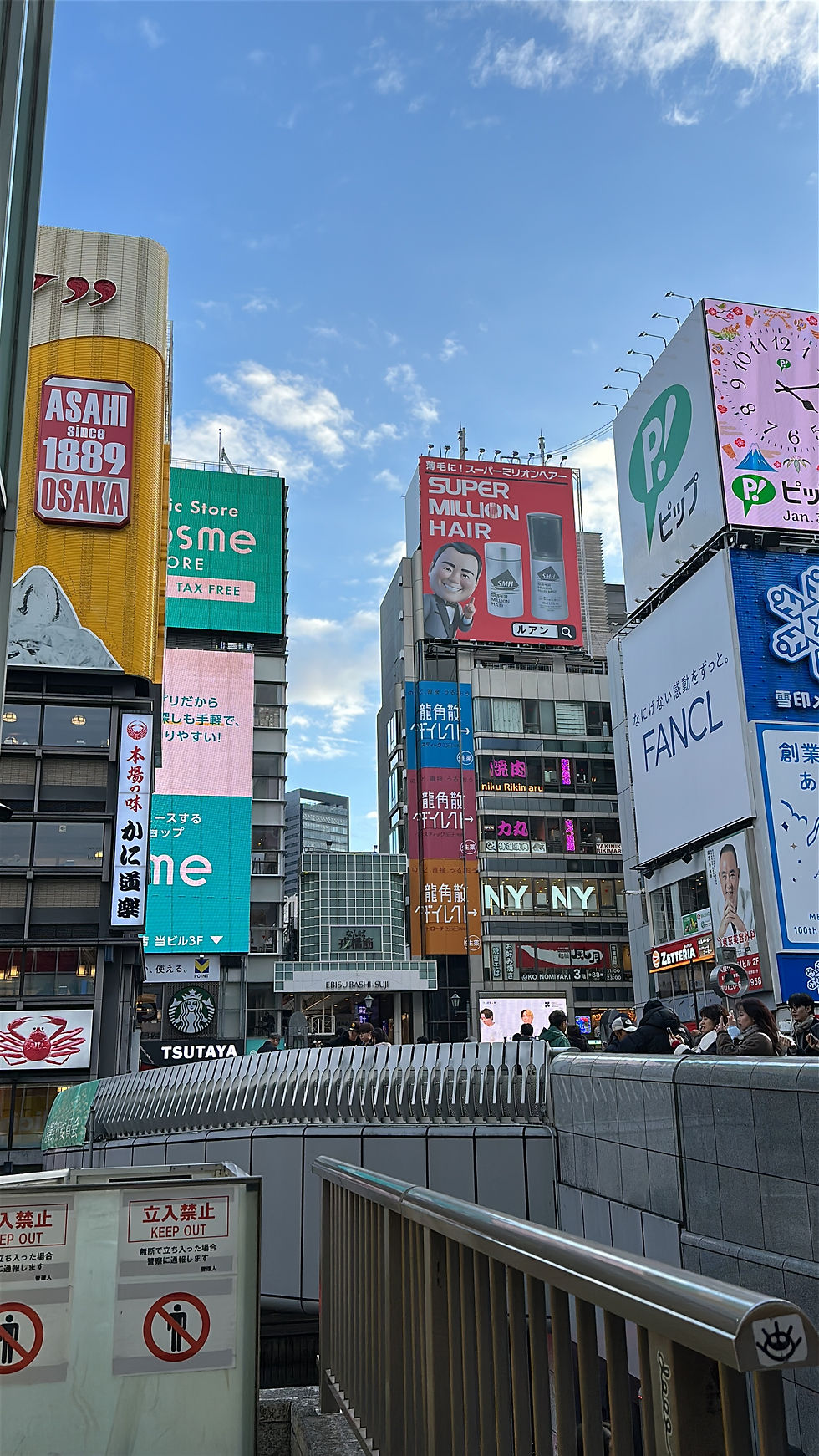
Day 6 - 10 Osaka
Day 6, we headed to Osaka via the Shinkansen bullet train. The train ride is about 2 hours and 30 minutes but did require a short taxi ride to Tokyo Station.
After check in, we walked the block to explore the Namba Shrine area and grabbed our 7-eleven essentials for the evening. Dinner that night was decided based on proximity to our hotel. The kids wanted a "chill" day.
Day 7 Dotonbori, Shinsaibashi & Kuromon
Day 7 was dedicated to shopping and exploring. Once again, the boys went to the arcade while we did some thrifting. We met up in Shinsaibashi and walked to Kuromon Market for some treats before heading back to our hotel. We saw a lot in a short amount of time and decided to try a gyoza restaurant near our hotel for dinner instead of staying out too late.
Day 8
We started our day at a local coffee shop near our hotel, which was across the street from Namba Yasaka Shrine. After coffee and the shrine, we headed back to Namba Parks and Shinsaibashi.

Day 9-10
Day 9, we went to Universal Studios and spent the entire day there. Our boys really wanted to experience Nintendo World and Mario Land in Osaka. This was the primary reason for us making Osaka our home base for so many days. The only thing that stands out in comparison to DisneySea is the price point. Things cost less at Disney. The markup on merchandise and food was noticeable at Universal. Keep that in mind when planning.
Day 10 was supposed to be a day trip to Kyoto, but half of the family didn’t want to go. I know, I know... first-timer criminal offense. My nose kept bleeding at Universal Studios, so I wasn’t sure I wanted to go either. I also couldn’t agree to leave two kids behind and risk another bloody nose day in a city an hour away. I was fine with this decision at the time. Now that I’m home, I do wish I had pushed through one more day to at least say I saw it. Instead, I have to reframe my thoughts and look forward to another trip to Japan.

Our compromise was visiting Osaka Castle instead. We went in the late morning and stayed for lunch before heading back to our hotel for a slow evening. I went with my daughter to Sophia Hair Studio (non-English speakers) for a haircut, and later, Mom and Dad had a date night to give the kids a “chill” evening, as requested. We did a mini izakaya crawl, where we tried Japanese whiskey and shochu. 10/10. If you have older kids, sneak in a date night!
Day 11-12: Back to Tokyo & Asakusa
Day 11, we headed back to Tokyo for our final two days in Japan. We opted to stay in Asakusa for a change in scenery and to explore the Senso-ji Temple area.

Day 12, we continued exploring the area. We went back to the temple for some reflecting and learned that the Asakusa Line (Toei/Keikyu) has direct rail access to and from Haneda. This made getting to the airport without taxi possible in under an hour. If you take anything from this post, remember that Asakusa is a great central point with direct access to the Haneda airport.
My Regrets & Lessons
As mentioned above, my only regret is not going to Kyoto and not realizing how many people are visiting Japan. Although we traveled during the “off-peak” season, both Tokyo and Osaka were extremely busy. Crowds were hardly avoidable after 10:00 a.m. I think Japan is just busy all the time.
With that being said, my greatest lesson is grace. It’s okay to miss things, and it’s okay to change the checklist as you go. I think open-jaw flights are a great way to help minimize unnecessary movement and backtracking. We should have flown into Osaka, made our way to Kyoto, and then gone to Tokyo for our departure flight. Noted for next time.
If you’re traveling alone or with a partner, I think a 12-day itinerary can include another city with a short stay. I still recommend the “do less” approach for maximum enjoyment, though. You simply move slower in crowded atmospheres. Then again, without kids, you can stay out longer.
Tips for Traveling by Train
Train Travel
Japan’s trains are known for punctuality and cleanliness. They are efficient and relatively inexpensive. My two cents, pay attention to the train line names and the train station names. This will help you navigate Google maps and should help minimize train confusion.
In regard to the Shinkansen bullet train, don’t stress about pre-booking tickets. The trains run all day long and have non-reserved seating options. There are three main lines to choose from: Nozomi, Hikari, and Kodama. I can’t speak much about the Kodama line, as it was never an option when we purchased our tickets. To my knowledge, it is a few dollars less than the other two, but the journey takes closer to four hours. The other two lines run simultaneously and frequently, so you can catch whichever train comes next with your non-reserved seat ticket. Unreserved seat tickets don’t include a time or platform number for this reason.
The only issue I foresee with unreserved seats is during peak travel seasons. You may not be able to seat your entire family or party together and should consider reserving seats.
As for cost, it is not exactly cheap. Japan’s bullet trains have a fixed rate based on distance. There are no perks for booking early or using a third party. This predictable pricing can be a pro or a con, depending on where you’re from. We paid about $90 per person each way. However, our youngest son still qualified for the child rate of $50 each way. Oh, and don't forget there's no talking on public transportation.
Taxi Use
Taxis are safe and convenient, especially when traveling with luggage or during late hours. Many taxis accept credit cards, but it’s good to have some yen in Japan. Taxis to and from the airport are around $100 for a one-way trip. It may be less for a smaller party, but your best bet is to download the GoTaxi app when you arrive and check for yourself. Uber is also an option, but we found the extra app fees and premier vehicle options to be more costly in comparison to GoTaxi. We used GoTaxi to transport us from the airport upon arrival and once more to get us to Tokyo Station when heading to Osaka. By the end of our trip, we had managed to memorize our train routes.
Apartment Hotels for Families
We stayed at three different MONday Premium Apart Hotels for the duration of our stay. Apart hotels are basically studio apartments with hotel amenities. Here's a breakdown:
Spacious rooms with separate sleeping areas based on number of people
Kitchenettes with fridge, microwave, stove or electric burner, electric kettle, and dishes
Laundry in room washer and dryer units with laundry soap in the lobby
Robes/Slippers Japan is no shoes on country and slippers were provided for free as well as fresh laundered robes for each person
Central locations near major attractions, convenience stores, and train stations
These features make apart hotels my personal recommendation for families. They had everything I needed as a mom. The room was fully stocked with dish soap, a sponge, a drying rack... everything needed to use the kitchen was there and ready for use. The in-room washing machine was also super convenient, and it allowed me to wash clothes at any hour in my pajamas.
Things to Know
Cash/Yen
Japan is a cash-based country. Yes, you can still use debit and credit cards in most places, but some vending machines, ramen shops, and food stalls will require cash. There are plenty of ATMs around, and currency exchange counters are available at major train stations if needed. Also, take a coin purse! Trust me, you'll need one.
When paying with cash, place your currency in the tray on the counter. Every store and restaurant will have a small tray near the cash register. It’s not for decoration, it’s meant for you to put the cash on it instead of handing it directly to the cashier. The cashier may hand it to you if they sense you don’t know this, but they won’t correct you. Just know what the trays are for and use them so no one is offended.
Tax Free
Carry your passport with you at all times. First, it’s a legal requirement. Second, it allows you to shop tax-free. Most shops have a purchase minimum you need to meet, but regardless, take advantage while you can!
Reservations
It's relatively easy to grab a meal in Japan. There are plenty of markets, ramen shops, and food stalls to get a quick bite to eat. That being said, dining can be a little more difficult for larger parties. You will most likely need to make a reservation on Tabelog, queue in line, or call the restaurant early. This is especially true for popular hot spots and heavy traffic areas.
Language
Download language translation apps! Japan is kind, and the people are great at making an effort to communicate with visitors, but you will definitely need some form of translation on your trip. Apps like Google Translate can help with menus, signs, and asking for directions. Even a few basic Japanese phrases go a long way and are appreciated by locals, especially in smaller shops, restaurants, and rural areas.
Dry Winter
Japan in the winter is very dry. The cold air and indoor heating wreaked havoc on my nose and throat, and by the second week, I was getting nosebleeds constantly. Luckily, our hotel room had a humidifier ready to use. Consider wearing a mask or packing some nasal spray for winter travel.
Stay Longer or Return
Again, Japan is busy. We definitely missed some neighborhoods and tourist sights on this first trip. I thought we could do more, but I didn’t push the kids beyond their limits. We collectively decided that we will be back, and I encourage you all to feel the same (if you like, of course).
A big family vacation is a constant compromise. Everyone has their needs, limits, and desires. Be patient and just let it be. Hope this helps, and enjoy your visit!
Xx
For my travel planning tips and tricks, check out the guide below. ↓


Comments